| Flame Resistance |
Inherent property, does not go away with laundering and wearing. Particularly superior resistance to industrial flash fire. |
|
|
| Heat Resistance |
Higher than natural fibers and most synthetic fibers, fabric strength keeps very stable even exposed up to 300°C heat. Expand when heated to close inter-fibre gaps and form heat insulation layers. |
|
|
| Static Resistance |
Blended with conducted fiber to achieve lasting anti-static nature. |
|
|
| Durability |
High mechanical strength, difficult to wear and break to achieve a long service life. Garments double or tripled stitched with aramid thread have extremely strong seams. |
|
|
| Functionality |
Meta aramid and para aramid have different nature. Different combination of the fibers offer different functional options and play various protective roles. |
|
|
|
|
|
|
|
Combination A: 93% Meta Aramid, 5% Para Aramid, 2% Antistatic carbon. Soft and comfortable, easy to make colours.
Combination B: 75% Meta Aramid, 23% Para Aramid, 2% Antistatic carbon. Stronger and higher heat resistance than combination A. |
|
| Main Uses |
1 |
Industrial protective work wear for oil/gas fields, oil refineries. |
| 2 |
Military and police uniforms. |
| 3 |
Electric power industry. |
| 4 |
Structural firefighting, wildland and forest fire fighting. |
| 5 |
Air crew uniforms, airfield ground maintenance workers. |
| 6 |
Car or motorbike racing. |
| 7 |
Chemical plants, laboratories. |
| Standards Met |
1 |
EN531 |
|
Garments Available
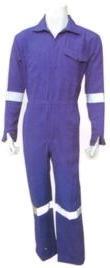
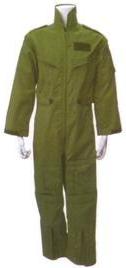
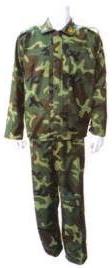
Coverall, flight suit.
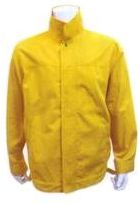
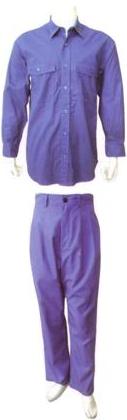
Work jacket, shirt, trousers, lab coat.
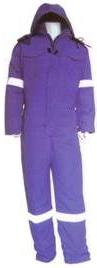
Insulated winter coverall, parka and bib overalls. |
| 2 |
NFPA2112 |
|
| 3 |
NFPA1971 |
|
| 4 |
NFPA1977 |
|
| 5 |
GB8965 |
|
|
 |
|
|